
Building a Brand in the Age of AI Content Review
Building a Brand in the Age of AI Content Review, In this era of artificial intelligence or AI, while creating content has become much easier than before, making a brand stand out is now a big challenge. Currently, various platforms including Google have increased the use of AI in content review, the main goal of which is to weed out low-quality and mechanical content. In this situation, it is not possible to succeed by creating content only with AI; rather, the right combination of human creativity with technology is required. In today’s blog, we will discuss how to maintain the credibility and uniqueness of your brand in the era of AI content review.
You’re navigating a fast-changing marketing landscape where ChatGPT, Google Bard, Jasper, and HubSpot’s AI can draft emails, taglines, and social posts in seconds. Building a Brand in the Age of AI Content evaluates how those tools alter voice, trust, and creative control across channels. This review is pragmatic and frank.
💡
Did You Know?
Tools like ChatGPT, Google Bard, Jasper, and Copy.ai can generate draft marketing copy in seconds, reshaping workflows for brand teams.
Source: OpenAI, Google, Jasper product docs
You’ll learn which tasks to delegate to AI and which to keep human: ideation, tone enforcement, legal checks, and final editing are compared. I test outputs from ChatGPT, Jasper, Copy.ai, and Canva Docs against metrics such as originality, brand fit, factual accuracy, and SEO performance. Expect concise pros and cons, hands-on examples, and a strategic framework you can apply immediately.
You’ll get direct comparisons, sample prompts, and checklist-style recommendations tailored to small teams and enterprise stacks like HubSpot and WordPress. Use the tests to decide whether to adopt ChatGPT workflows or maintain human-first creative review. It stays actionable and realistic.
Why AI Content Matters Now

You’re evaluating tools while the publishing landscape is shifting underfoot. Building a Brand in the Age of AI Content is no longer an experimental thesis—it’s an operational reality that impacts how your messages reach customers. Platforms such as OpenAI’s GPT-4 and ChatGPT have accelerated expectations for turnaround and iteration.
Speed matters: GPT-4, Jasper AI, and Copy.ai compress draft cycles from days to minutes, so you can A/B test headlines and CTAs rapidly. That velocity lets you react to trends faster, but it also increases the risk of low-quality churn if editorial standards aren’t enforced.
Scale changes the math of content ROI. Tools like SurferSEO and HubSpot’s CMS integrations enable volume publishing and optimization at scale, making it feasible to populate niche topical clusters across channels. You can dominate keywords quickly, yet scaling without strategy often creates bland, templated pages that erode brand distinctiveness.
Accessibility has improved—Canva and Adobe Express embed generative features so non-designers produce polished visuals and copy. That lowers barriers and democratizes creativity, which is positive for small teams and early-stage brands that can’t hire full creative departments.
Quick Impacts of AI on Content
▶
Speed
Tools like OpenAI GPT-4 and Jasper AI cut iteration time from days to minutes.
▶
Scale
Platforms such as Copy.ai and SurferSEO let you generate and optimize hundreds of pages quickly.
▶
Accessibility
Canva and Adobe Express integrate AI to lower the creative barrier for non-designers.
▶
Differentiation Risk
Widespread use of models like Claude and Bard raises the chance of homogenized messaging.
▶
Trust Exposure
Errors from hallucinations or stale knowledge can damage credibility—human review remains essential.
But risk is real: Claude, Bard, and generative pipelines can produce plausible inaccuracies or tone mismatches that harm brand trust. You must treat AI as a productivity layer, not an autopilot; governance, style guides, and fact-checking workflows are mandatory.
What this means for you
Prioritize editorial oversight, adopt tools like Grammarly and Hemingway for clarity, and use analytics from SEMrush or Google Analytics to measure engagement quality, not just output volume. If you want a defensible brand, combine AI speed with human judgment to preserve distinctiveness and credibility.
AI Models and Capabilities
You need clarity about the technical differences between models because they directly affect brand tone, factuality, and cost. Models from different families trade off parameter scale, latency, and adaptability, which shapes the output you publish under your brand name.

Parameter sizes and practical strengths
Llama 2 ships in 7B, 13B, and 70B variants—smaller sizes are cheaper to run and easier to fine-tune, while the 70B improves coherence on complex prompts. Falcon 40B sits between open families and offers strong structured-prompt performance for product descriptions. Mistral 7B targets efficiency and throughput, letting you scale high-volume workflows affordably. Closed models like GPT-4 and Anthropic’s Claude 2 remain top-tier for nuanced creative direction but carry higher cost and API constraints.
Model Family Snapshot
Quick comparison of open and closed models, their typical uses, and tradeoffs for brand content.
- ✓ Llama 2 (7B/13B/70B): flexible, good for fine-tuning
- ✓ Falcon 40B: performant for structured prompts
- ✓ Mistral 7B: efficient for high-throughput
Capability differences matter for brand content quality: larger parameter models typically produce more fluent narrative, better long-range context handling, and fewer non-sequitur errors. That improves mission-critical outputs like blog posts or campaign storytelling where voice consistency and low hallucination risk are non-negotiable. Conversely, smaller models can produce acceptable short-form copy and metadata at a fraction of the cost if you apply tighter prompting and template control.
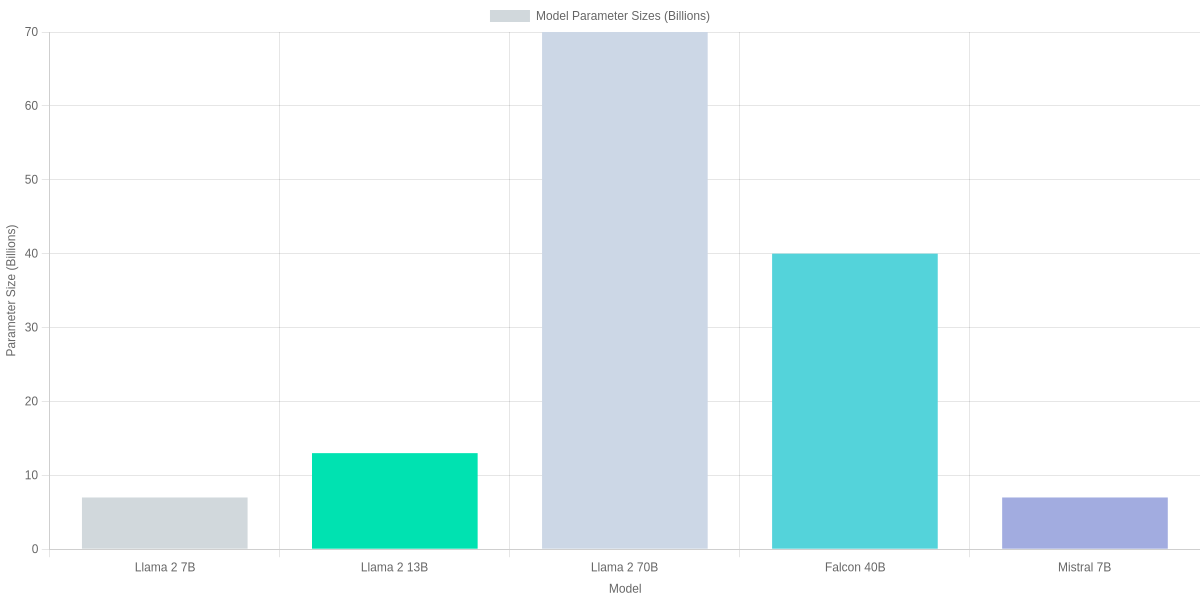
Tradeoffs extend beyond quality: latency, inference cost, and fine-tuning complexity all rise with model size. Larger models like Llama 2 70B or Falcon 40B demand more robust infrastructure and stricter prompt engineering to avoid inconsistent brand voice. Smaller models reduce iteration time and let you A/B test tone and headlines quickly without breaking budget.
Choosing lightweight vs. large
Pick a lightweight model (Llama 2 7B, Mistral 7B) when you need high throughput: automated product blurbs, SEO snippets, and large-scale personalization benefit from speed and low cost. Choose mid-to-large models (Llama 2 13B/70B, Falcon 40B, GPT-4, Claude 2) when you require sustained narrative coherence, complex reasoning, or tighter brand voice control. Use a hybrid approach—cheap models for drafts and larger models for final refinement—to balance cost and quality for branded content.
Fine-tune or instruct-tune on representative brand style guides and sample assets to reduce hallucinations and preserve distinct voice across channels. Adjust safeguards, human-in-the-loop review, and prompt templates according to the model family you deploy to protect brand trust.

Pros and Cons: A Hands-on Review
You’ll find AI tools like OpenAI’s GPT-4, Anthropic Claude, and Jasper transform how quickly content moves from concept to publishable draft. This review focuses on practical outcomes for brand teams: speed, cost, and the trade-offs you’ll need to manage.
Quick Action Steps
⚡
Speed & Drafting
Use GPT-4 or Jasper to produce first drafts and social posts in minutes—ideal for tight calendars.
📈
Scalability
Scale content production across channels with Anthropic Claude or OpenAI APIs without hiring a large team.
💸
Cost Efficiency
Lower per-article costs by combining AI (GPT-4) with human editors to reduce freelancer hours.
🔁
Iterative Testing
Run A/B content variants using Jasper + Surfer SEO to optimize headlines and meta descriptions quickly.
⚠️
Authenticity Risks
AI can dilute brand voice; you’ll need human editors and style guides to preserve authenticity.
❗
Hallucinations & Errors
GPT-4 and other models occasionally fabricate facts—validate with Copyscape, Google Search Console, and human review.
🔍
SEO & Detection Concerns
Overuse can trigger Google detection or SEO penalties; combine Surfer SEO insights with original reporting.
Pros
- Speed: GPT-4 and Jasper cut drafting time dramatically. You can generate blog drafts, email sequences, and social captions within minutes, which helps you hit editorial deadlines.
- Scalability: Anthropic Claude or OpenAI APIs allow you to pump out content at scale without proportional headcount increases. That’s useful for localization and multi-channel campaigns.
- Cost-efficiency: Combining AI with human editors lowers per-article costs compared with hiring many freelance writers. Use Grammarly and Hemingway for lightweight editing to preserve polish.
- Iterative testing: Tools like Jasper paired with Surfer SEO let you run fast A/B headline and meta tests to improve click-through rates.
Cons
- Authenticity risks: AI can flatten brand voice. If you rely on models without a strict style guide and human oversight, your content may feel generic or inconsistent.
- Hallucinations: GPT-4 and others sometimes fabricate facts or sources. You must verify claims with Copyscape, Google Search Console checks, or subject-matter experts before publishing.
- SEO & detection concerns: Over-optimization and repetitive AI phrasing can attract detection or ranking issues. Surfer SEO helps, but original reporting remains safer for long-term authority.
- Ethical and legal risk: For regulated topics—health, finance, legal—AI errors carry heightened liability, so human vetting is non-negotiable.
Use-case examples: where AI excels and where it fails
Excel: GPT-4 and Jasper are excellent for product descriptions, social media calendars, email A/B variants, and localization drafts. You’ll save time and iterate headlines faster using Surfer SEO insights.
Fail: Investigative features, nuanced brand storytelling, and thought leadership require original reporting and a human authorial voice. In these areas, Anthropic Claude or GPT-4 can assist with research, but you must lead with subject-matter experts to avoid hallucinations and maintain credibility.
Practical Strategy: Building a Brand in the Age of AI Content
You need a hybrid workflow that preserves your brand voice while scaling output. Use ChatGPT (ChatGPT Plus or API) to draft variations, Jasper.ai to tune for SEO and templates, and Grammarly Business to codify tone and catch plagiarism. This triage reduces pure-AI drift and keeps editorial oversight tight.
Hybrid workflows: combine human creativity with AI efficiency
Generate first drafts with ChatGPT Plus to save time, then run Jasper.ai for SurferSEO-driven headlines and keyword-aware copy. Finally, route each asset through a human editor who applies your Grammarly Business style guide and enforces the brand’s voice. That three-stage flow balances speed with nuance.
Action Steps
Hybrid Workflow
Use GPT-4 (ChatGPT Plus/API) for drafts, then route to Jasper for SEO tweaks and a human editor for tone and accuracy.
Editorial Guardrails
Create a style guide and enforce with Grammarly Business style guides plus plagiarism checks.
Verification & Compliance
Run factual claims through Factiva/Google Scholar and record sources for legal review.
Measure & Iterate
Track KPIs—engagement, trust scores, and compliance incidents—and refine templates monthly.
Editorial guardrails, verification, and legal compliance
Define non-negotiables in your style guide (factual sourcing, tone, banned phrases). Use Grammarly Business’s Style Guides and Jasper’s brand controls to bake rules into the workflow. For verification, log sources for every factual claim and maintain an audit trail for legal review.
Measurement: KPIs to track performance, trust, and compliance
Track metrics across three buckets: performance (CTR, time on page), trust (customer-reported accuracy, misinformation incidents), and compliance (plagiarism flags, legal review passes). Automate dashboards that pull data from Google Analytics, SurferSEO, and your CMS to evaluate impact.
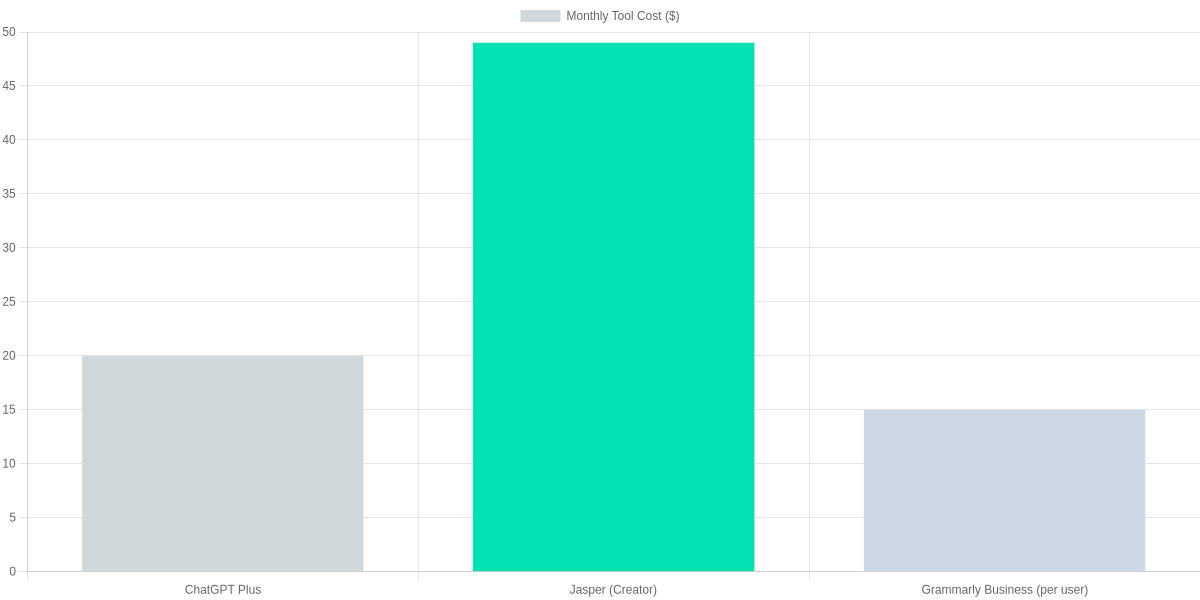
| Feature | ChatGPT Plus | Jasper.ai | Grammarly Business |
|---|---|---|---|
| Monthly price (approx.) | $20/month (ChatGPT Plus) | $49/month (Creator plan) | $15/user/month (Business) |
| Custom brand voice | Custom Instructions; limited persistent tuning | Brand Voice templates & custom tones | Style Guides and custom tone controls |
| Plagiarism detection | No built-in plagiarism checker | Plagiarism check via Jasper integration (Copyscape) | Built-in plagiarism checker |
| SEO integration | No native SEO tools | Native SurferSEO and Jasper integrations | No native SEO integration (3rd-party via workflow) |
| Enterprise features | API access and enterprise offerings | SSO, team workspaces, brand controls | SSO, admin controls, onboarding support |
Pros: Faster output, scalable personalization, measurable KPIs when you instrument the workflow. Cons: Risk of voice drift, added verification overhead, and recurring tool costs that compound across teams.
Frequently Asked Questions
You’re evaluating whether AI can replace human writers for brand storytelling. This review weighs GPT-4, Claude, and Jasper against human editors and creative leads.
Maintain a consistent voice with prompt libraries, OpenAI fine-tuning, and Jasper presets, plus a mandatory human QA pass. Use SurferSEO or Clearscope to protect SEO while avoiding low-quality mass generation.
Detect and label AI content responsibly with OpenAI metadata, watermarking, or GPTZero; disclose AI use in footers or metadata where appropriate. Legal risks include copyright, GDPR, and licensing issues, so consult counsel.
FAQ Accordion
Can AI replace human writers for brand storytelling?
▼
How do I maintain a consistent brand voice when using AI?
▼
Will AI-generated content hurt my SEO rankings?
▼
How can I detect and label AI-generated content responsibly?
▼
What legal and ethical considerations should I be aware of?
▼
Pros and cons
- Pros: Faster drafts with GPT-4 and Jasper; scale content production; consistent templates via OpenAI fine-tuning.
- Cons: Risk of generic tone, detection issues with GPTZero, potential SEO penalties for low-quality pages.
- Pros: Cost efficiency and ideation speed; SurferSEO integration improves relevance.
- Cons: Legal exposure for unlicensed training data and privacy gaps under GDPR.
You should pilot with Copysmith or Jasper on narrow campaigns, measure engagement, and keep human editors in the loop. Balance automation and craft to preserve brand distinctiveness and mitigate risks from automated scaling.
Use A/B tests and legal review before scaling GPT-4 deployments in production now.
Key Strategies for Brand Building (English)
E-E-A-T Principle: Focus on Experience, Expertise, Authoritativeness, and Trustworthiness to satisfy search engine algorithms.
Human-in-the-Loop (HITL): Use AI for drafting but ensure a human editor adds unique insights, personal anecdotes, and brand voice.
Storytelling: Develop a unique brand narrative that AI cannot replicate, connecting emotionally with your audience.
Visual Identity: Incorporate original imagery and branded videos to differentiate from generic AI-generated visuals.
Audience Engagement: Prioritize building a community through social proof, reviews, and direct interaction.
Conclusion
As a review, Building a Brand in the Age of AI Content shows that you can scale output with ChatGPT and Jasper.ai while keeping identity intact. You should treat AI as a collaborator, not a replacement, and use SurferSEO, Google Analytics, HubSpot and Canva to measure and polish results.
Pros
- Rapid content production with ChatGPT/Jasper.ai that reduces time-to-publish.
- Measurable gains via SurferSEO and Google Analytics for SEO-driven growth.
- Design-ready assets from Canva speed visual consistency.
Cons
- Risk of generic voice without human editing and brand guardrails.
- Dependence on tools can inflate costs (Jasper.ai, SurferSEO subscriptions).
- Compliance and originality require ongoing audits.
Next steps: audit existing content, set editorial guidelines, A/B test in HubSpot, and iterate.
🎯 Key Takeaways
- → Balance AI tools like ChatGPT and Jasper.ai with human editing to protect brand voice.
- → Use SurferSEO and Google Analytics for measurable SEO gains; A/B test with HubSpot.
- → Establish editorial guardrails, run regular content audits, and prioritize authenticity.
TL;DR: Building a Brand in the Age of AI Content evaluates how tools like ChatGPT, Bard, Jasper, and Canva reshape marketing—speeding drafts, scaling SEO, and democratizing creative work—while increasing risks of homogenized voice and factual errors. It gives hands-on comparisons, prompts, and a practical framework that recommends using AI for ideation and bulk optimization but keeping humans for tone enforcement, legal checks, and final editing to protect brand trust.
Ultimately, AI can speed up our work, but it can never create the ‘soul’ of a brand or the emotional connection that people have with people. To survive in this era of AI content review, your brand must be informative as well as authentic. The right use of technology and the combination of human creativity will ensure your brand’s long-term success. Remember, algorithms may change, but the importance of quality and human trust always remains the same.
“What is your biggest challenge with AI content review? Let’s discuss in the comments below, and don’t forget to share this guide with your fellow marketers!”

I ‘m Md. Osman Goni > Founder of SearchAIFinder and an AI content specialist. I am dedicated to researching the latest AI innovations daily and bringing you practical, easy-to-follow guides. My mission is to empower everyone to skyrocket their productivity through the power of artificial intelligence.”
💬 We’d Love to Hear From You!
Which of these AI tools are you excited to try first? Let us know in the comments below!