
5 Proven Ways to Passive Income in 2026:
A Beginner’s Guide to Passive Income

5 Proven Ways to Passive Income in 2026 “Are you looking for practical ways to turn accessible AI tools into a steady income in 2026? You are in the right place. Today, consumer-grade AI models like ChatGPT-4o, Midjourney, and DALL·E 3 allow anyone to produce high-quality articles, stunning graphics, and viral video scripts in seconds.
The demand for AI-driven services on platforms such as Upwork, Fiverr, and Etsy has skyrocketed, making it possible for you to start your digital career without a technical degree or complex coding skills. In this comprehensive review, we reveal five beginner-friendly, actionable paths to monetize AI. We will evaluate the best tools, identify the most profitable marketplaces, and show you exactly where to find your first high-paying clients.”
💡
Did You Know?
By 2026, consumer-ready AI tools like ChatGPT, Midjourney, and DALL·E have made creating content and designs accessible—opening beginner-friendly income paths across platforms such as Upwork and Etsy.
Source: Industry adoption trends, 2024–2026
5 Proven Ways to Make Money with AI in 2026 (Beginner Friendly Guide)
- Freelance Content Writing with AI
- AI-Powered Graphic Design & POD
- YouTube & Faceless Channels with AI
- AI Affiliate Marketing
- Selling AI Prompts
Practical tips include using ChatGPT for outlines, Midjourney and DALL·E for visuals, and marketplace listings on Fiverr and Etsy to convert work into revenue.
Freelance Content Writing with AI

You can scale content production by collapsing hours of research and first-draft writing into minutes. Tools like ChatGPT and GPT-4o paired with Perplexity or Google Scholar pull topic overviews and source links fast, while Claude 2 or Jasper adjusts tone and brand voice for specific clients.
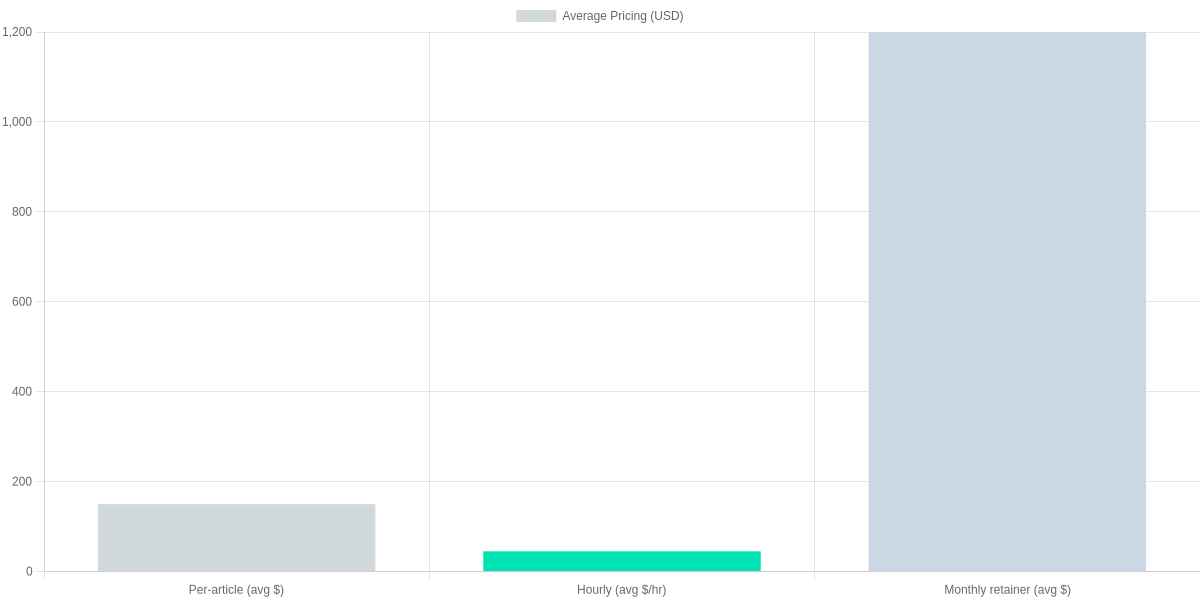
Sell your services on Upwork, Fiverr, and LinkedIn with clear delivery models: per-article, hourly, or retainers. Typical market anchors you can test: per-article ($50–$500), hourly ($20–$100/hr), or monthly retainer ($500–$3,000). Use these to position entry, standard, and premium tiers.
Combine GPT-based assistants with an editing chain: Grammarly, Hemingway, and Wordtune tighten clarity and tone. Run SurferSEO or Clearscope alongside Yoast or RankMath in WordPress to meet search intent and optimize headings, meta, and keyword density.
Quick Action Items
▶
AI-accelerated research
Use ChatGPT/GPT-4o plus Perplexity or Google Scholar for topic insights and source links in minutes.
▶
Draft with GPT assistants
Generate first drafts using ChatGPT, Claude 2, or Jasper and save 60–80% of writing time.
▶
Editing chain
Pass drafts through Grammarly, Hemingway, and Wordtune for clarity, tone, and conciseness.
▶
SEO optimization
Run SurferSEO or Clearscope with Yoast or RankMath in WordPress for keyword density and structure.
▶
Delivery & pricing
Offer per-article ($50–$500), hourly ($20–$100/hr), or monthly retainer ($500–$3,000) packages on Upwork, Fiverr, and LinkedIn.
Quick workflow to start your first gig
- Pick a niche and craft three sample briefs using ChatGPT/GPT-4o.
- Create an Upwork or Fiverr gig with clear scopes and a sample portfolio piece.
- Automate drafts (ChatGPT/Jasper) then run editing chain (Grammarly → Hemingway → Wordtune).
- Optimize with SurferSEO or Clearscope and deliver via Google Docs or WordPress.
- Ask for testimonials and convert good clients to retainers.
Pros and Cons
- Pros: You scale output quickly, lower turnaround, and command tiered pricing on Upwork, Fiverr, and LinkedIn.
- Pros: Tools like GPT-4o, Jasper, and SurferSEO raise consistency and SEO performance.
- Cons: You must manage hallucinations and verify sources; editing still takes time.
- Cons: Competition drives rate pressure—specialize to protect margins.
5 Proven Ways to This Method (Beginner Friendly Guide)
Freelance Content Writing with AI
AI-Powered Graphic Design & POD
YouTube & Faceless Channels with AI
AI Affiliate Marketing
Selling AI Prompts
AI-Powered Graphic Design & Print-On-Demand (POD)
This pathway pairs generative image models with print‑on‑demand marketplaces so you quickly produce mockups and dozens of variations. You’ll likely start in Midjourney, DALL·E 3 or Stable Diffusion for concepts, polish assets in Canva or Photopea, then route orders through Printful integrations to Redbubble, Teespring, or Etsy.
Fast AI Design for POD
Use Midjourney, DALL·E 3, and Stable Diffusion to produce high-variation art — then finalize in Canva or Photopea. Automate mockups with Placeit or Printful integrations for faster listings.
- ✓ Generate 50+ variations with img2img and prompts
- ✓ Auto-create mockups in Placeit/Printful
- ✓ Push best-sellers to Redbubble/Teespring
Workflow is straightforward: generate 30–100 variations using img2img and prompt engineering, batch-transfer winners to Placeit for mockups, then publish via Printful or Teespring APIs. Use Canva templates to add text layers for T‑shirts and stickers. Split‑test color, copy, and thumbnail with simple ad or organic traffic experiments.
Typical margins vary: 20–40% on marketplace items after platform fees, lower on custom bulk work but higher per-order revenue. Startup costs are modest: $100–$1,000 for subscriptions (Midjourney, Stable Diffusion GUI, Canva Pro), sample orders, and minimal ad spend.
To scale, niche down (pets, vintage, gaming) and automate listings with Printful/Etsy connectors. Prioritize analytics: track conversion rate per design, and reinvest in winning sets. Consider hiring contract designers to curate top AI outputs.
Pros and Cons
- Low startup if you use free models and Printful
- Fast iteration with Midjourney / Stable Diffusion
- Passive income via Redbubble/Teespring listings
- Copyright and TOS risk depending on prompts
- Low per-unit margins on saturated niches
- Requires continuous testing and promotion
Plan incremental tests first before scaling budgets.
YouTube & Faceless Channels with AI

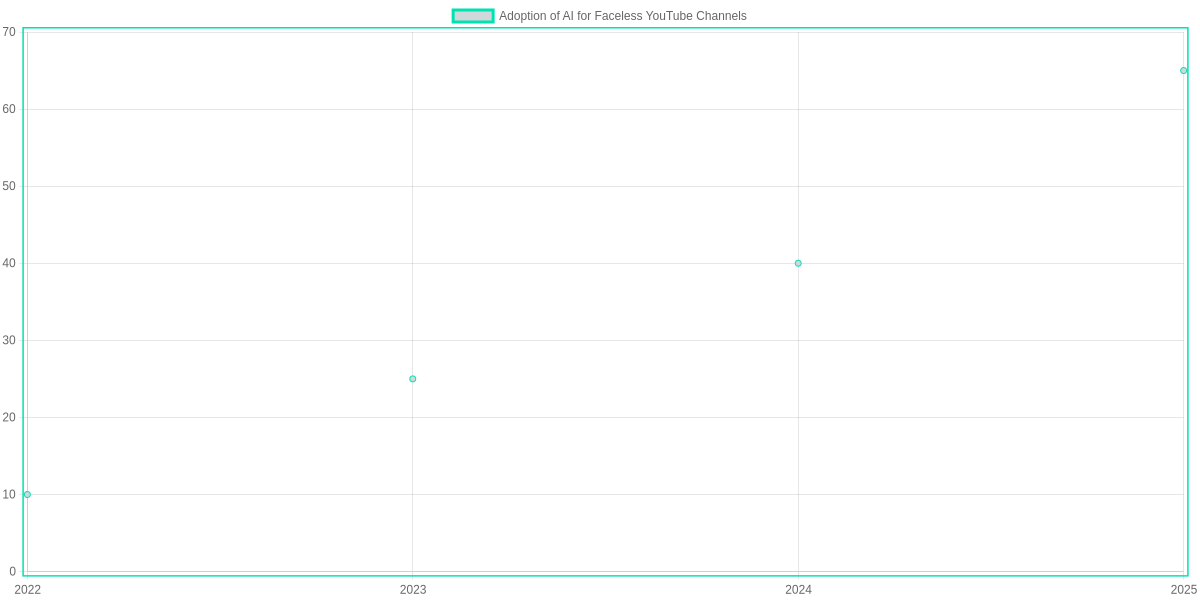
Faceless channels publish content without on-camera hosts, and AI has turned them from niche experiments into scalable businesses. You can use ChatGPT-4o or Anthropic Claude to write tight scripts, ElevenLabs or Murf.ai for near-human voiceovers, and Pictory, Descript, or Runway to stitch visuals and captions together. TubeBuddy and VidIQ help validate topics and keyword CPC so you pick higher-CPM niches.
Faceless Channel Workflow
🔎
niche research
Validate topics with TubeBuddy and VidIQ; pick evergreen niches with CPC.
📝
Script with AI
Use ChatGPT-4o or Anthropic Claude to draft concise 3–6 minute scripts.
🎙️
AI Voiceover
Generate lifelike narration with ElevenLabs or Murf.ai; add emotion controls.
🎬
Video Assembly
Use Pictory, Descript, or Runway to convert scripts to footage with stock clips and AI scenes.
🖼️
Thumbnails & Titles
Design with Canva Pro and test thumbnails using TubeBuddy A/B tests.
💰
Monetize & Scale
Enable YouTube Partner ads, set Channel Memberships, onboard sponsors via Grapevine/Influencity, and add Amazon/Impact affiliate links.
Monetization paths
- YouTube Partner Program (ads) — requires 1,000 subs and 4,000 watch hours or Shorts criteria.
- Channel Memberships and Super Thanks for recurring revenue.
- Sponsorships via Grapevine or Influencity and direct brand deals.
- Affiliate links (Amazon, Impact) in descriptions and pinned comments.
Realistic timeline: you can publish AI-assisted videos weekly and expect initial traction in 3–6 months; meaningful ad income typically appears 6–12 months after consistent uploads. To optimize CPM and engagement, target high-value niches (finance, SaaS, legal), optimize thumbnails in Canva Pro, use TubeBuddy A/B testing, and boost watch time with tight scripting from ChatGPT-4o.
Ethics & copyright
Verify commercial licenses for stock clips and music. Avoid voice cloning of real people without consent—ElevenLabs requires permission for public figures. Disclose AI use in descriptions when required and follow YouTube and OpenAI/Anthropic policies to reduce takedowns.
Pros & Cons
- Pros — Low production cost, fast scaling with Pictory/Runway, reusable scripts from ChatGPT-4o.
- Cons — Copyright risk for AI assets, potential demonetization if you misrepresent voices or use unlicensed media.
AI Affiliate Marketing
3 Quick Steps
Create AI Content
Use ChatGPT, Jasper, and Surfer SEO to draft reviews, landing pages, and SEO briefs.
A/B Test & Optimize
Run experiments with Optimizely or VWO on headlines, CTAs, and email variants to improve conversion rates.
Automate Funnels
Build Klaviyo/ConvertKit flows, integrate with Zapier/Make, and scale paid retargeting on Facebook/Google/TikTok.
AI can turn affiliate marketing into a predictable income channel. Use ChatGPT and Jasper to create review posts and email sequences, and Surfer SEO to optimize for search. You’ll A/B test headlines and CTAs with Optimizely or VWO to lift conversion rates.
Pick niches with high AOV—SaaS, crypto tools, and premium courses—and promote offers from Impact, ShareASale, Amazon Associates, or ClickBank. Track conversion rate, AOV, and ROI in Google Analytics and Looker Studio; automate attribution with Postback or Voluum for paid traffic.
Balance low-cost paid channels (Facebook Ads, Google Ads, TikTok Ads) and organic growth using AI for content calendars, social clips with Pictory, and SEO briefs from Surfer. Build Klaviyo or ConvertKit email funnels to nurture cold traffic into repeated buyers.
Pros
- Scales with automation and predictable ROI
Cons
- Requires upfront testing budget and tracking setup
To scale from side income to full-time, aim for 2–5% conversion, AOV $50+, and 3x ROI. Automate with ActiveCampaign, Zapier, or Make and expand paid retargeting to compound returns consistently.
Selling AI Prompts
You can package prompts as playbooks, prompt packs, or ready-to-use templates—think ChatGPT prompt playbooks, Notion-integrated prompt templates, or fine-tuning instruction sets. Buyers expect clear use cases and examples.
Where to sell and how to package
Gumroad Prompt Packs
Good for launching playbooks, templates, and tiered bundles. Supports licenses, subscriptions, and coupon codes.
- • One-off sales or recurring subscriptions
- • Tiered licensing (personal, commercial)
- • Sell prompt templates, fine-tuning prompts, and UX snippets
PromptBase & Etsy Listings
PromptBase targets prompt buyers; Etsy suits creative prompt packs and niche templates. Use clear licensing and examples.
- • PromptBase marketplace discovery and analytics
- • Etsy audiences for creative/novelty prompts
- • Show before/after AI outputs as proof of value
Price with tiered licensing (personal vs commercial), offer Gumroad or Stripe subscriptions, and create bundles on PromptBase or Etsy. Use low-priced entry packs and higher-priced consulting upsells for custom prompt engineering.
Prove value by showing before/after outputs, walkthrough videos, and short case studies. Avoid commoditization by niche positioning and limited commercial licenses.
Pros / Cons
- Pros: scalable revenue, recurring subscriptions, marketplace discovery.
- Cons: marketplace fees, easy copying, price pressure on generic prompts.
Comparison Table: Which AI Money Path Fits You?
🚀
Important Insight
Pick one AI path, test fast, iterate. Start small (one paid gig or MVP), measure revenue, then scale what works.
This side-by-side review evaluates three practical ways you can monetize AI skills: OpenAI API productization, MidJourney art and prints, and Fiverr gigs. The table below highlights earnings potential, startup cost, time-to-profit, skill barrier, and scalability so you can match a path to your available time and goals.
Comparison Table: Which AI Money Path Fits You?
| Feature | OpenAI API (SaaS/Integrations) | MidJourney (AI art & prints) | Fiverr (AI services & gigs) |
|---|---|---|---|
| Earnings potential | High — SaaS can scale to $5k–$100k+/mo | Moderate — $200–$5k+/mo from prints/commissions | Variable — $100–$5k+/mo by niche |
| Startup cost | Low–moderate (API fees; prototype $20–$200/mo) | Low (MidJourney subs ≈$10–$50/mo + POD fees) | Minimal (free listings; optional ads) |
| Time to profit | Weeks–months | Days–weeks | Days–weeks |
| Skill barrier | Medium–High | Low–Medium | Low |
| Scalability | Very high | Moderate | Low–Moderate |
Quick recommendations
- Part-time: Fiverr — fastest to paid work with minimal setup and repeatable gigs.
- Creator: MidJourney — best if you monetize prints, NFTs, or commissions and enjoy visual work.
- Entrepreneur: OpenAI API — choose this if you can build an MVP and chase scalable recurring revenue.
Pros & Cons
- OpenAI API — Pros: highest upside and passive scaling. Cons: needs dev/product skills and longer validation.
- MidJourney — Pros: quick sales loop for creators and low cost. Cons: competitive market and variable pricing.
- Fiverr — Pros: near-immediate cash flow and low barrier. Cons: time-bound gigs unless you productize.
Decision flow: pick one path, run a cheap test (one gig or MVP), measure revenue, then iterate or pivot based on real results.
Pros and Cons Review
Quick Pros & Cons
Low Startup Cost
Use ChatGPT, Jasper, or Hugging Face to start with minimal investment.
Fast Creation
OpenAI GPT and Runway speed up content and video production.
Scalable
Micro‑SaaS or model APIs scale revenue without linear hiring.
Competition
Upwork and Fiverr markets are crowded; differentiation is key.
Platform Risk
Policy changes at OpenAI, Midjourney, or YouTube can impact income.
Quality & Ethics
Hallucinations, bias, and copyright need oversight and auditing.
You can get started with minimal capital using tools like ChatGPT, Jasper, and Runway for content and media production. Speed is a major advantage: models such as OpenAI’s GPT, Midjourney, and Synthesia accelerate content and course creation, letting you test ideas quickly.
Pros
- Low startup cost — leverage ChatGPT, Hugging Face models, or free tiers on Runway.
- Fast output — produce blog posts, scripts, or marketing assets in hours with Jasper and GPT.
- Scalable — SaaS and model-backed products can scale without proportional labor increases.
Cons
- High competition on Upwork and Fiverr niches; differentiation is harder.
- Platform risk — policy changes at OpenAI, Midjourney, or YouTube can disrupt revenue.
- Quality control and ethics — hallucinations, copyright issues, and bias need oversight.
Beginners and solopreneurs should try content freelancing and micro-SaaS; enterprises and regulated professionals should be cautious and audit model outputs and recurring subscription options too.
Frequently Asked Questions
Top FAQs
How much can a beginner realistically earn in month 1?
▼
Do I need paid AI tools to get started?
▼
Are there copyright or ownership risks when using AI?
▼
How do I price my services or products?
▼
Which method scales fastest to full-time income?
▼
My Opinion : 👇
You can realistically monetize AI this year across five paths with different effort and risk profiles. Title : 5 Proven Ways to Make Money with AI in 2026 (Beginner Friendly Guide)
Freelance Content Writing with AI
AI-Powered Graphic Design & POD
YouTube & Faceless Channels with AI
AI Affiliate Marketing
Selling AI Prompts. Freelance writing (ChatGPT, Jasper) suits low-cost, steady client work; design & POD (Canva, Midjourney, Printful) fits creators; faceless YouTube (TubeBuddy, VidIQ) targets scalable ad revenue; affiliate marketing (ClickBank, AffiliateWP) favors marketers; selling prompts (PromptBase) productizes your craft.
🎯 Key Takeaways
- → Pick one path that fits your goal: Freelance Content Writing with AI, AI-Powered Graphic Design & POD, YouTube & Faceless Channels with AI, AI Affiliate Marketing, or Selling AI Prompts.
- → Start with tools like ChatGPT/Jasper for writing, Canva/Midjourney/Adobe Firefly for design, TubeBuddy/VidIQ for YouTube, ClickBank/AffiliateWP for affiliate marketing, and PromptBase for prompts.
- → Set measurable goals (clients, revenue, uploads). Focus for 4 weeks, measure results, then iterate weekly — scale what works.
Pros & Cons
- Pros: low startup cost, scalable income, strong tooling (ChatGPT, Canva, Midjourney) that speeds execution.
- Cons: high competition, platform dependency, and initial learning for analytics tools like TubeBuddy.
Next steps: pick one method, set measurable goals (clients/month, $/month, uploads/week), track weekly, and iterate. Commit four weeks of focused testing, then double down on what grows.
TL;DR: By 2026, consumer-grade AI tools like ChatGPT, Midjourney, and DALL·E make it easy for beginners to monetize content and design—this guide outlines five practical paths: freelance writing, AI-powered graphic design & POD, faceless YouTube channels, AI affiliate marketing, and selling AI prompts. It provides step-by-step workflows, recommended tool stacks (GPT-4o, Claude, Perplexity, SurferSEO, Grammarly, etc.), pricing anchors, and marketplaces (Upwork, Fiverr, Etsy) to help you convert fast AI outputs into paying clients.
Final Thoughts: Your AI Journey Starts Now ✨
“The year 2026 is a golden era for those who know how to leverage technology. Making money with AI isn’t a dream anymore—it’s a practical reality. By mastering tools like ChatGPT, Midjourney, and YouTube automation, you are not just keeping up with the world; you are staying ahead of it.
Don’t wait for the perfect moment. Pick one of the five methods we discussed today, start experimenting, and stay consistent. If you found this guide helpful, make sure to bookmark SearchAIFinder.com and share this post with your friends who want to build a digital career. Your future is just one prompt away!”

I ‘m Md. Osman Goni > Founder of SearchAIFinder and an AI content specialist. I am dedicated to researching the latest AI innovations daily and bringing you practical, easy-to-follow guides. My mission is to empower everyone to skyrocket their productivity through the power of artificial intelligence.”
💬 We’d Love to Hear From You!
Which of these AI tools are you excited to try first? Let us know in the comments below!