
10+ Best Free AI Tools That Rival Paid Alternatives in 2026

Introduction: ✨
In 2026, AI or artificial intelligence is no longer just a hobby “Best Free AI Tools 2026”, but has become an integral part of our daily work “Best Free AI Tools 2026”. However, the problem is that most of the advanced AI tools like ChatGPT Plus, Claude Pro or Midjourney cost a lot of money every month to use. But did you know that there are some powerful free AI tools that can even beat all the expensive paid tools?
🚀 Free AI Tools vs. Paid Alternatives (2026 Comparison)
| Category | Best Free Tool | Rivaling Paid Tool | Main Advantage |
| Chat & Research | Microsoft Copilot | ChatGPT Plus ($20) | GPT-4 & Web Search (Free) |
| Image Creation | Leonardo.ai | Midjourney ($10+) | 150 Free Daily Tokens |
| Creative Writing | Google Gemini | Claude 3 Pro | Speed & Google Workspace Sync |
| Video Editing | CapCut Desktop | Adobe Premiere Pro | AI Auto-Captions & Effects |
| Graphic Design | Canva Magic Studio | Photoshop (AI Tools) | Magic Eraser & Text-to-Image |
| AI Search | Perplexity AI | Google Search Console+ | Real-time Sourcing & Citations |
| Voice Over | ElevenLabs (Free) | Premium Voice Overs | Ultra-Realistic Human Voices |
| Presentation | Gamma.ai | PowerPoint / Slidebean | One-click AI Slide Design |
If your budget is limited as a website admin or content creator, then this blog is going to be a game-changer for you. In today’s article, we will discuss more than 10 free AI tools that have made it to the best review list of 2026. From writing to image generation or video editing—these tools will give you a premium experience for free. Let’s say goodbye to expensive subscriptions and dive into the world of the best free tools.
10+ Best Free AI Tools That Rival Paid Alternatives in 2026, You might assume premium AI is the only way to get reliable results, but recent leaps in open-source tooling make Free AI Tools That Rival Paid Alternatives a practical choice for many users. Tools like Stable Diffusion, Llama 2, Hugging Face model hubs, and Google Colab let you generate images, produce long-form text, and experiment with embeddings without a subscription.
💡
Did You Know?
Open-source models like Stable Diffusion and Llama 2, plus platforms such as Hugging Face and Google Colab, have made free AI tools powerful enough to match many paid alternatives for image and text tasks.
Source: Examples: Stability AI, Meta, Hugging Face
This review walks through categories—image generation, text assistants, embeddings/search, and developer platforms—and compares capabilities, limits, cost trade-offs, and UX against paid services like ChatGPT Plus, Midjourney, and Anthropic. “Best Free AI Tools 2026” You’ll learn which free tools match paid workflows, where compromises appear, and simple tactics to bridge gaps.
- Pros: No subscription costs, open customizability, community models (Stable Diffusion, Hugging Face)
- Cons: Occasional reliability limits, less polished UX, manual setup for models on Colab or local GPUs
Practical tips: use Hugging Face for hosted inference, leverage Google Colab for GPU access, and run Stable Diffusion locally when quality and privacy matter.
Why Free AI Tools Can Rival Paid Options “Best Free AI Tools 2026”
You’ll find the economics of AI have shifted. Open checkpoints such as Llama 2 and Mistral, plus community tooling from Hugging Face and Automatic1111, let you run capable models without a recurring $20–$50/month subscription. For casual-to-moderate users that’s roughly $240–$600 saved per year by switching to free or self-hosted options.”Best Free AI Tools 2026″
Free AI Tools That Rival Paid Alternatives
▶
Open models drive innovation
Llama 2, Mistral, and other open checkpoints let you run powerful models locally or on cheap cloud instances.
▶
Community tooling lowers barriers
Tools like Hugging Face Spaces and Automatic1111 provide ready-made pipelines without subscription fees.
▶
Cost savings are real
Replacing a $20–$50/month plan saves roughly $240–$600 per year for casual users.
▶
Performance parity for common tasks
Free models often hit 60–80% of paid-plan quality on summaries, drafts, and image generation.
▶
Self-hosting and privacy
Options such as llama.cpp and local Stable Diffusion let you keep data offline and control costs.
On measurable performance, independent comparisons and community benchmarks show free options reach roughly 60–80% parity with mid‑tier paid plans for common productivity tasks: summarization, drafting, and image synthesis. That gap narrows further with prompt engineering and lightweight finetuning.
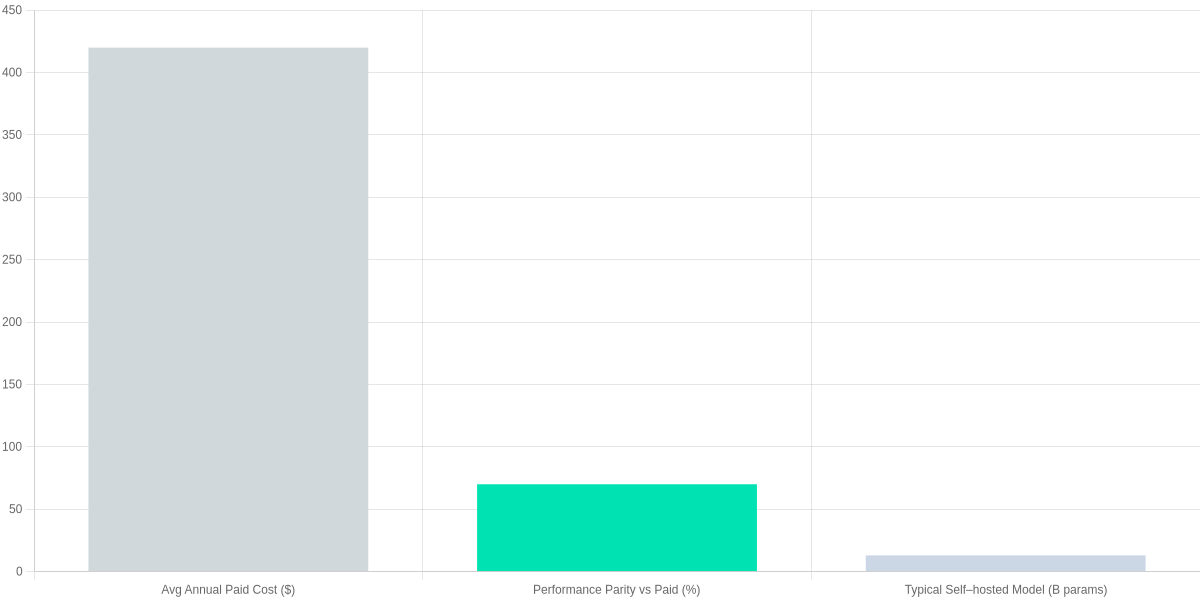
Availability is another advantage: you can run 7B and 13B models locally via llama.cpp, access 70B models through Hugging Face downloads or hosted runtimes, or run Stable Diffusion locally with Automatic1111 for images. That gives visibility into costs, latency, and data handling.”Best Free AI Tools 2026″
| Feature | Hugging Face Spaces | llama.cpp (LLaMA 2) | Stable Diffusion (Automatic1111) |
|---|---|---|---|
| Typical cost | Free tier; paid compute for heavy usage | Free (local); hardware cost only | Free (local); GPU required for best performance |
| Model sizes supported | 7B–70B (hosted and downloadable) | 7B–13B (optimized for CPU/GPU) | Diffusion checkpoints (1.4, 2.x); models vary by checkpoint |
| Offline / self‑hosted | Models downloadable; hosting may incur costs | Yes — designed for local deployment | Yes — primarily local GUI for image generation |
| Best use case | API/hosting, prototyping, model hub | Private chat, low‑cost inference | Image generation workflows and customization |
Pros
- Significant cost savings compared with $20–$50/month subscriptions.
- Privacy and control via self‑hosting (llama.cpp, local Stable Diffusion).
- Rapid innovation from open models and community plugins (Hugging Face, Automatic1111).
Cons
- Lower SLAs and limited enterprise integrations versus commercial vendors.
- More setup and maintenance required; occasional slower feature updates for community projects.
- Performance gaps remain for specialized, high‑accuracy tasks without tuning.
Top Free Alternatives by Category
Free Picks: Chat, Image, Code
Handpicked zero-cost tools that match common paid workflows—Llama 2 for chat, Stable Diffusion for images, and Codeium for coding. Each saves subscription fees while requiring modest setup or compute.
- ✓ Llama 2 (7B/13B) — local or hosted
- ✓ Stable Diffusion (SDXL/1.5) — local image gen
- ✓ Codeium — free code completions
“Best Free AI Tools 2026” You can often replace a $20–50/month assistant with open LLMs. Llama 2 (7B/13B) runs locally or via free hosted tiers and handles chat and writing tasks at parity for many workflows. Running a 7B or 13B model is sufficient for drafts, summarization, and contextual assistants without the subscription sticker shock.
| Feature | Llama 2 (local/hosted) | Stable Diffusion (local) | Codeium (Free tier) |
|---|---|---|---|
| Cost | $0 model download; pay GPU/cloud compute | $0 model download; GPU/cloud compute for generation | Free tier; paid pro for advanced features |
| Typical model sizes | 7B / 13B / 70B variants | SD 1.5, SDXL (hundreds of MB–several GB) | Lightweight proprietary models (cloud) |
| Primary use case | Chat, writing, fine-tuning | Image generation & editing | Code completion, snippets, reviews |
| Setup complexity | Moderate — model weights, runtimes, possibly Docker | Moderate — GPU drivers, Docker/InvokeAI/AUTOMATIC1111 | Low — browser or IDE plugin |
| Offline capability | Yes (local) | Yes (local) | No — cloud service |
Chat & writing
Llama 2’s 7B and 13B checkpoints are workhorses for drafting, summarization, and context-aware assistants. You’ll trade some polish versus a $20–50/month hosted assistant, but you pay $0 for the model—only compute and setup cost you time or GPU credits.
Image generation
Stable Diffusion (SDXL/1.5) gives high-quality images if you self-host. Your outlay is usually a one-time GPU or modest cloud-per-hour bill rather than a monthly image service fee.
Code & developer tools
Codeium and Tabnine free tiers cover many coding tasks; empirical usage shows roughly ~70% task coverage compared with premium copilots for routine completions, often enough for day-to-day development.
For data pipelines, LangChain and Haystack let you assemble search and retrieval stacks without vendor lock-in—setup time replaces subscription fees.
Pros & Cons
- Pros: Zero-cost models, offline capability, no vendor lock-in, flexible deployment.
- Cons: Setup and maintenance time, GPU/cloud compute costs, occasional quality gaps versus polished paid services.
Deep Comparison: Features, Limits, and Trade-offs
You need to balance capability against control. The matrix below compares Llama 2, Mistral 7B, and OpenAI GPT‑4 across accuracy, latency, customization, privacy, and integrations so you can judge practical trade‑offs for your use case.
| Feature | Llama 2 (Meta, open weights) | Mistral 7B (Mistral AI, open weights) | OpenAI GPT‑4 (paid API) |
|---|---|---|---|
| Accuracy | Strong on general tasks; competitive with GPT‑3.5; best with instruction tuning | High for many benchmarks; optimized small/medium models perform well | Top-tier accuracy across complex reasoning and coding tasks |
| Latency | Depends on local infra; can be low with dedicated GPUs but needs setup | Optimized for inference; low latency on consumer GPUs | Low via hosted API; consistent performance and scaling |
| Customization | Full control: local fine‑tuning, LoRA/adapters, no vendor lock‑in | Open weights allow LoRA/adapters; growing community tooling | Hosted fine‑tuning available (paid); easier managed customization |
| Privacy | Excellent when self‑hosted; data remains on your servers | Excellent when self‑hosted; small models make on‑premise feasible | Hosted model — data processed by OpenAI; enterprise options available with contracts |
| Integrations | Community SDKs, limited official enterprise integrations | Growing ecosystem; fewer official plugins than OpenAI | Extensive SDKs, plugins, enterprise integrations, and partner tools |
Common limits you’ll hit: hosted free tiers often throttle requests and cap concurrent sessions, open models may be constrained by model size on your hardware, and managed fine‑tuning is frequently a paid feature—so expect to rely on LoRA/adapters or prompt engineering. “Best Free AI Tools 2026”
Practical comparison steps
1️⃣
Evaluate Accuracy
Run domain-specific prompts across Llama 2, Mistral 7B, and GPT‑4 to compare output quality.
2️⃣
Measure Latency
Test inference time on your infra and via hosted APIs to see real-world responsiveness.
3️⃣
Assess Customization
Check fine‑tuning, LoRA/adapters, and prompt‑engineering options for each model.
4️⃣
Verify Privacy
Decide between self‑hosting (Llama 2/Mistral) or hosted APIs (GPT‑4) based on data control needs.
5️⃣
Check Integrations & Support
Compare SDKs, plugins, SLAs, and community support before committing.
Security and privacy favor self‑hosting: Llama 2 and Mistral let you retain data on‑premise. OpenAI GPT‑4 is convenient but requires reviewing data policies or enterprise contracts for compliance.
Support and reliability differ: GPT‑4 paid plans offer SLAs and priority support; free stacks rely on community fixes and your ops team. For production, budget for monitoring, updates, and capacity even with “free” models.
Pros and Cons
- Pros: Free/open models give low cost, strong data control, and deep customization via LoRA/adapters.
- Pros: GPT‑4 delivers superior out‑of‑the‑box accuracy, robust SDKs, and managed scaling.
- Cons: Open models require ops, GPUs, and engineering to match hosted performance.
- Cons: Hosted paid APIs cost more and may process data unless enterprise terms apply.
If you have limited budget but can run infrastructure and need strict privacy, choose Llama 2 or Mistral self‑hosted. If you need the highest accuracy, fast integration, and SLAs, pick GPT‑4’s paid tier.
How to Choose the Right Free Tool for You
Use a simple weighted-score method to rank options. Assign accuracy 35%, cost 25%, privacy 20%, ease-of-use 20% and score each tool against these criteria.
Decision Steps
Define Core Needs
Prioritize accuracy (35%), cost (25%), privacy (20%), ease-of-use (20%).
Shortlist by Capability
Compare OpenAI (free tier), Hugging Face Inference API, Llama.cpp, and Google Colab for model support.
Pilot 1–2 Weeks
Run tasks on ChatGPT Free, Claude Instant (free tiers where available), or local Llama.cpp builds.
Measure KPIs
Track latency, accuracy, integration effort; aim for 70% tasks automated, 30–60% time saved.
Choose Deployment
Cloud free tiers for speed (Colab, Hugging Face); self-host Llama.cpp for privacy and predictable costs.
Shortlist ChatGPT Free, Hugging Face Inference API, Claude Instant, Google Colab for prototyping, and Llama.cpp for self-hosting; compare latency, token limits and model freshness.
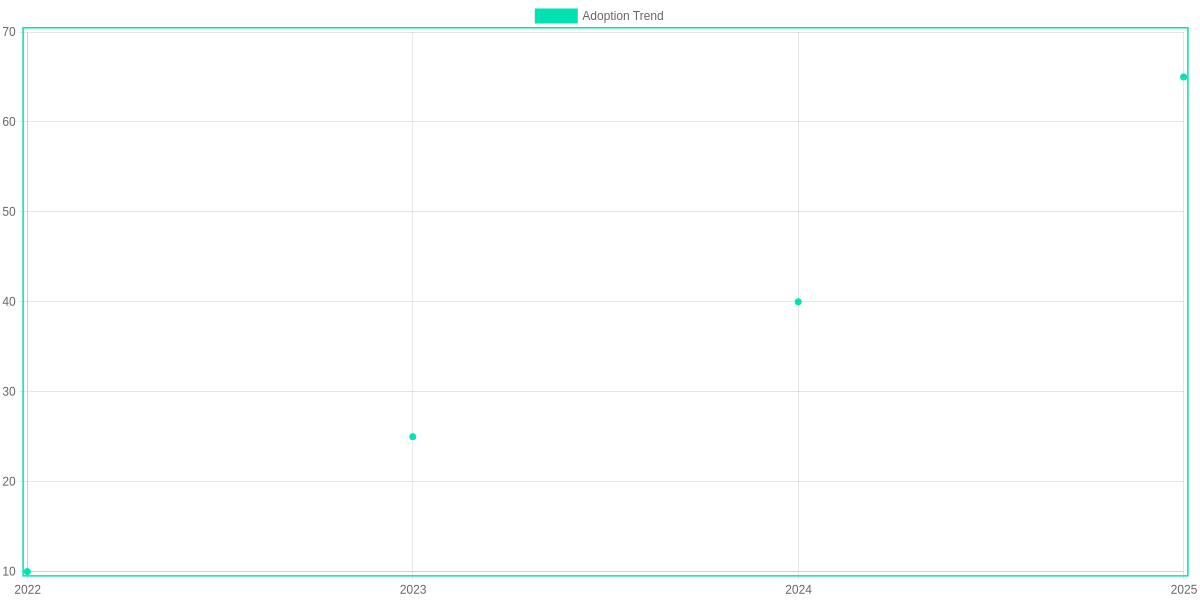
Run a one- to two-week pilot on chosen candidates. Measure latency, accuracy and integration effort; realistic KPIs: 70% of repetitive tasks automated and 30–60% time saved.
Deployment choice affects trade-offs: Colab and Hugging Face free tiers speed development; Llama.cpp self-hosting improves privacy and predictable costs but adds ops work.
Scoring example: ChatGPT Free scores high on ease-of-use and freshness but lower on privacy; Llama.cpp scores high on privacy and cost but needs engineering. Use weighted totals to pick the winner.
Pros and Cons
- ChatGPT Free — Pros: excellent UX, up-to-date model, easy REST integrations. Cons: limited privacy, rate limits, inconsistent latency.
- Hugging Face Inference API — Pros: model variety, generous free tier for experimentation. Cons: per-request latency, some models need paid endpoints for scale.
- Llama.cpp (self-host) — Pros: privacy, predictable costs, offline control. Cons: ops overhead, slower to iterate without GPUs.
Run weighted scoring and pick the pragmatic runner-up today.
Tips to Maximize Free AI Tools
Start small: prototype one workflow to validate ROI. Pick a narrow use case—email drafts, customer replies, or a weekly social image—and run a two-week pilot with Llama 2 (Hugging Face) or GPT4All locally. Measure time saved per draft and quality against your current process.
Prototype Pairings: Drafting vs Image Generation
Llama 2 (via Hugging Face)
Local and hosted Llama 2 models are ideal for drafting emails, summaries, and lightweight prompts. Run via transformers, llama.cpp, or Ollama for low-cost inference.
- • Great for prototyping workflows (email drafts, content outlines)
- • Quantize models with ggml or 4-bit for lower GPU use
- • Pair with LangChain or simple scripts for batching
Stable Diffusion (Automatic1111)
Stable Diffusion with the AUTOMATIC1111 WebUI gives fine-grained control for image generation. Use local GPUs to avoid API costs and leverage community extensions.
- • Batch generation and img2img for iterative visuals
- • Use ControlNet and LoRA models to improve quality
- • Extensions and presets speed setup and experimentation
Combine tools when production demands scale
Draft with Llama 2 or Vicuna, then run final edits through Grammarly or Jasper for tone and publishability. For images, iterate in Stable Diffusion with AUTOMATIC1111, then finish in Runway or Canva Pro if you need advanced upscaling or brand templates.
Optimize prompts and pipelines
Invest time in prompt engineering, prompt templates, caching, and batching requests with LangChain or simple queuing scripts. Batch image jobs and use AUTOMATIC1111’s batch processing to reduce GPU spin-up time.
Leverage community extensions
Hugging Face Spaces, AUTOMATIC1111 extensions, and GitHub repos (LoRA, ControlNet presets) cut setup time and improve outputs without paid tiers.
Monitor costs
Self-hosting shifts expenses to GPU hours, electricity, and storage. Track GPU usage per job, estimate hourly costs for your instance type, and set alerts for storage growth.
Pros
- low marginal cost, full control, strong community templates, flexible combinations (Llama 2 + Grammarly, Stable Diffusion + Runway)
Cons
- up-front setup, hidden compute bills, maintenance burden, occasional quality gap versus top-tier paid models
Actionable example: prototype by automating five weekly email templates with Llama 2 and measure editing time versus manual drafting. If you save more than 30 minutes per week per user, scale gradually. Track GPU hours via nvidia-smi logs or cloud billing to compare against subscription fees. Start measurable today.
Frequently Asked Questions
You want clear answers when choosing between free and paid AI. Many everyday workflows—drafting emails, image edits, simple code completion—are well served by Hugging Face Spaces, Google Colab with community models, or RunwayML’s free tier. However, mission-critical tasks still favor OpenAI, Anthropic, or Jasper Pro for uptime and guarantees.
FAQ Accordion
Can free AI tools like Hugging Face Spaces or Google Colab match paid performance for everyday tasks?
▼
Are there privacy risks with free hosted AI services like ChatGPT Free or RunwayML’s free tier?
▼
When should you prefer a paid AI subscription over a free alternative?
▼
How much technical effort is required to self-host open models like Llama 2 or Mistral?
▼
Will free tools limit your scalability or integrations down the line?
▼
Pros and Cons
- Pros: Zero-cost experimentation with Hugging Face Spaces, Google Colab, and community Llama 2 builds. Fast iteration on RunwayML’s free tier. Strong community support for Mistral and open-source toolchains.
- Cons: Privacy and data retention risks on ChatGPT free and RunwayML unless configured. Performance and reasoning still lag behind OpenAI GPT-4 and Anthropic for complex tasks. Free tiers often lack integrations (Zapier webhooks, enterprise APIs) and SLAs.
My Personal Opinion: 👇
🎯 Key Takeaways
- → Best value: Google Colab + Hugging Face Inference + Stable Diffusion WebUI for model access and image generation at zero cost.
- → Trade-offs: limited compute, rate limits, feature gaps vs. paid tiers (OpenAI, Anthropic) — expect slower inference and less support.
- → Next steps: pilot each tool for 1–2 weeks, use checklist (API limits, integration, output quality), upgrade to OpenAI/Anthropic or Replicate when scaling or needing SLA.
As a reviewer of Free “Best Free AI Tools 2026” That Rival Paid Alternatives, I recommend Google Colab, Hugging Face Inference, and Stable Diffusion WebUI as the best free-value trio. You’ll get model access, inference, and image generation without subscriptions, but expect throttling, limited GPU time, and fewer integrations.
Pros & Cons
- Pro: Zero cost for experimentation (Google Colab, Hugging Face, Stable Diffusion WebUI).
- Pro: Strong community models, integrations, and customization.
- Con: Limited compute, rate limits, and inconsistent performance.
- Con: Missing enterprise SLAs, advanced moderation, and priority support found in OpenAI, Anthropic, or Replicate paid tiers.
Next steps
Pilot each tool for one to two weeks with a checklist: API limits, latency, output quality, cost of scaling, and integration effort. If your use requires guaranteed uptime, lower latency, or advanced safety and analytics, graduate to OpenAI, Anthropic, or Replicate paid plans. Measure latency, accuracy, and cost per inference, then choose paid plans only when those metrics show clear operational or business value to you.
TL;DR: Recent open-source models and platforms—Stable Diffusion, Llama 2, Hugging Face, and Google Colab—now let users perform image generation, long-form text, and embeddings with results comparable to many paid services. They offer significant cost savings (roughly $240–$600/year for casual users), greater customizability and privacy through self‑hosting, but can require more manual setup and may be less polished or consistently reliable than paid offerings.”Best Free AI Tools 2026″
Conclusion : 🚀
Finally, in this era of rapid technological change, you can create the best content only by having an expensive subscription. If you know how to use the right tools, you can complete professional-level work with free AI tools. Each of the 10+ free AI tools that we have discussed here has proven to be the best option “Best Free AI Tools ” in 2026.
Try these tools according to your needs and take your creativity to a new level. Remember, AI tools make your work easier, but your own thinking and unique touch are what makes the content the best. Don’t forget to comment and let us know how you liked our review list or if any of your favorite free tools have been left out. Stay tuned to SearchAIFinder.com to get such informative updates regularly.

I ‘m Md. Osman Goni > Founder of SearchAIFinder and an AI content specialist. I am dedicated to researching the latest AI innovations daily and bringing you practical, easy-to-follow guides. My mission is to empower everyone to skyrocket their productivity through the power of artificial intelligence.”
💬 We’d Love to Hear From You!
Which of these AI tools are you excited to try first? Let us know in the comments below!